
Gut Health & Beyond
The Gut–Body Connection: How Gut Health Relates to Skin, Hormones, Stress, Mood & Beyond
Explore how gut health relates to skin, hormones, stress, mood and energy. Learn what functional stool testing can show about the gut–body connection.
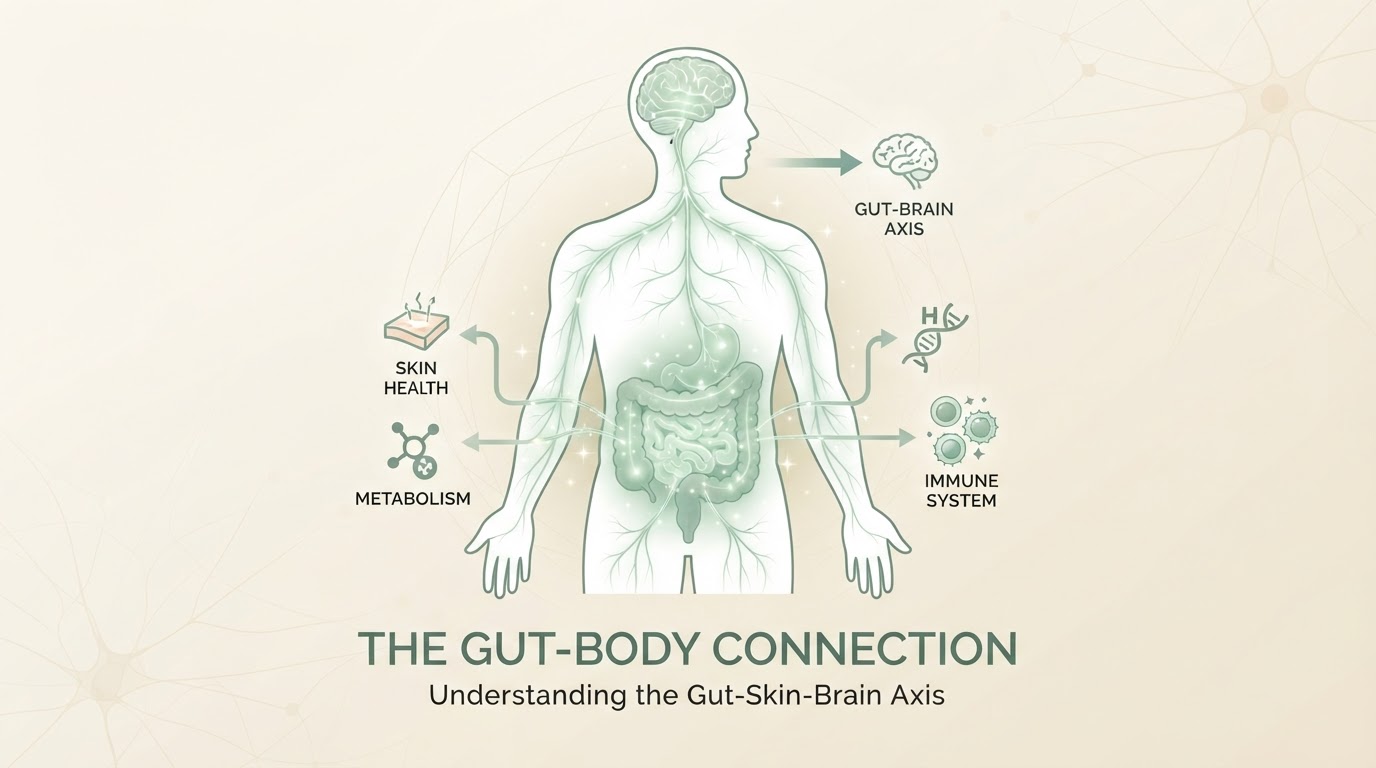
Many people notice that their symptoms don't stay in one neat category. Skin issues show up at the same time as digestive changes. Mood shifts appear alongside fatigue. Hormone patterns feel off when stress feels harder to handle.
These experiences often lead people to look for a more connected view of the body. In functional nutrition, the gut is often seen as a central hub. It plays roles in immune signaling, nutrient absorption, hormone metabolism, and communication with the brain and nervous system.
This page explores common associations between the state of the gut and symptoms in other areas of the body. It also explains how functional stool testing can provide useful data points.
The Gut as a Central Hub
The gut does much more than digest food.
- It contains a large part of the body's immune system.
- It helps produce and regulate molecules that affect mood and stress.
- It plays a role in how hormones are processed and recycled.
- Its barrier affects what passes into the bloodstream.
- Its microbial community talks constantly with the nervous system through the gut–brain axis.
When microbial balance, digestion, barrier function, or immune activity in the gut changes, other systems can reflect those shifts. These relationships go in both directions. Looking at the gut offers one helpful lens when symptoms appear in several areas at once.
Skin Health and the Gut (Gut-Skin Connection)
Skin concerns such as acne, eczema-like patterns, rosacea, dullness, or sensitivity often appear in conversations about gut health.
Common points of connection include:
- The balance of microbes in the gut
- How well the gut barrier is working
- How well nutrients are absorbed (nutrients the skin needs for repair)
- Immune signals that start in the gut
Many people notice that skin changes and digestive discomfort show up around the same time. Viewing skin symptoms alongside gut function can give a fuller picture.
Hormone Balance and the Gut (Gut-Hormone Connection)
Hormone-related experiences — irregular cycles, PMS patterns, estrogen-related symptoms, and shifts in energy — are often looked at together with gut health.
Key areas of association include:
- Certain gut microbes that help process and recycle estrogens
- Nutrient absorption needed for hormone production
- Inflammation and immune signals that can affect hormone pathways
- Stress-related changes in digestion that may influence hormone clearance
Checking digestive function and microbial patterns can add useful context when hormone symptoms are part of the picture.
Stress, the Nervous System, and the Gut
The gut and nervous system communicate in both directions. Stress can change gut motility, microbial balance, and barrier function. At the same time, signals from the gut can affect how stress feels.
Commonly observed associations include:
- Changes in gut immune markers during long-term stress
- Shifts in beneficial and opportunistic microbes when the stress response stays activated
- Changes in how quickly food moves through the gut
- Feedback between gut signals and brain areas involved in mood and alertness
Many people find that digestive symptoms get louder during stressful periods. Looking at both the gut and the stress response together often proves helpful.
Mood, Psychology, and the Gut–Brain Axis
The gut–brain axis is a well-researched communication pathway. Microbes, immune signals, and nerves (including the vagus nerve) create ongoing dialogue between the gut and the brain.
Associations that are often explored include:
- Microbial influence on molecules that affect mood
- Inflammatory signals that may influence brain function
- Nutrient status that depends partly on good digestion
- The effect of gut barrier function on wider immune activity
Brain fog, low mood, anxiety patterns, or focus issues are therefore frequently considered alongside gut ecology rather than on their own.
Energy, Metabolism, Immune Regulation & Circadian Links
Fatigue, uneven energy, and feeling "inflamed" often appear together with digestive symptoms. Possible links include reduced nutrient absorption, changes in microbial by-products, immune activation from the gut, and the energy cost of maintaining the gut barrier.
Sleep and daily rhythms also matter. Many gut microbes follow a 24-hour pattern. Irregular light exposure, meal timing, or sleep can influence both the gut environment and daytime energy.
Looking Objectively at Gut Health with Functional Stool Testing
Symptoms give important information, but they are subjective. Functional stool testing offers a way to gather objective data about the current state of the gut.
Modern stool tests can look at:
- DNA-based detection of bacteria, opportunistic organisms, potential pathogens, parasites, and fungi
- Levels of beneficial flora
- Digestive function markers (such as pancreatic elastase)
- Inflammation markers (such as calprotectin)
- Gut-specific immune activity (secretory IgA)
- Indicators related to barrier function (when included)
These results are most useful when viewed together with a person's history, current symptoms, and other information such as mineral patterns from hair tissue mineral analysis (HTMA) or standard blood work. The aim is a clearer overall picture.
Bringing the Pieces Together
When skin, hormone, mood, stress, energy, and digestive symptoms are viewed as potentially linked, the gut often stands out as one important part of the network. Objective stool testing can show patterns in microbes, digestion, inflammation, and immune activity that may relate to the symptoms someone is experiencing.
This information can then be considered alongside mineral patterns, stress physiology, daily rhythms, and lifestyle factors. The result is a broader understanding of the terrain in which symptoms are appearing.
Frequently Asked Questions
Can gut health be related to skin issues?
Many people notice that skin patterns often change at the same time as digestive comfort or microbial balance. Research continues to explore these links through immune and metabolic pathways.
How does the gut connect to stress and mood?
The gut and brain communicate through nerves, immune signals, and microbial by-products. This is called the gut–brain axis. Stress can affect the gut, and the gut can affect how stress and mood feel.
What can functional stool testing show?
It can provide data on microbial composition, digestive markers, inflammation, gut immune activity, and sometimes barrier-related indicators. These are objective data points that sit alongside symptom history.
Is the gut involved in hormone balance?
Certain gut microbes help process and recycle hormones, especially estrogens. Nutrient absorption and inflammation levels, both influenced by gut function, also play a role.
Should stool testing be used alone?
Stool testing is most helpful when viewed together with clinical history, current symptoms, and other assessments such as HTMA.
Curious What Stool Testing Might Show?
If you are curious about what functional stool testing might show in relation to your symptoms and history, you are welcome to explore the testing options or schedule a discovery conversation to see whether it is a good next step for you.
The information on this page is educational and is not a substitute for personalized medical advice, diagnosis, or treatment. Always consult a qualified healthcare provider for medical concerns.