
MRT Food Sensitivity Panel
You already suspect food is involved in how you feel. You may have already done an IgG food sensitivity test, eliminated 40 foods, and still felt crummy. Or you tried a strict elimination diet, couldn't identify a clear pattern, and gave up. There is a structural reason those approaches failed: food sensitivity reactions can be delayed by up to 72 hours, making it impossible to connect Tuesday's meal to Thursday's migraine. And standard IgG tests only measure one immune pathway. The MRT measures all of them.
We'll discuss the scope and cost before you commit.
Discuss Options With KellyWhat Makes the MRT Different
Most at-home food sensitivity tests — and many practitioner-ordered ones — measure IgG antibodies only. IgG is one pathway by which white blood cells get triggered to release inflammatory mediators. It is not the only pathway.
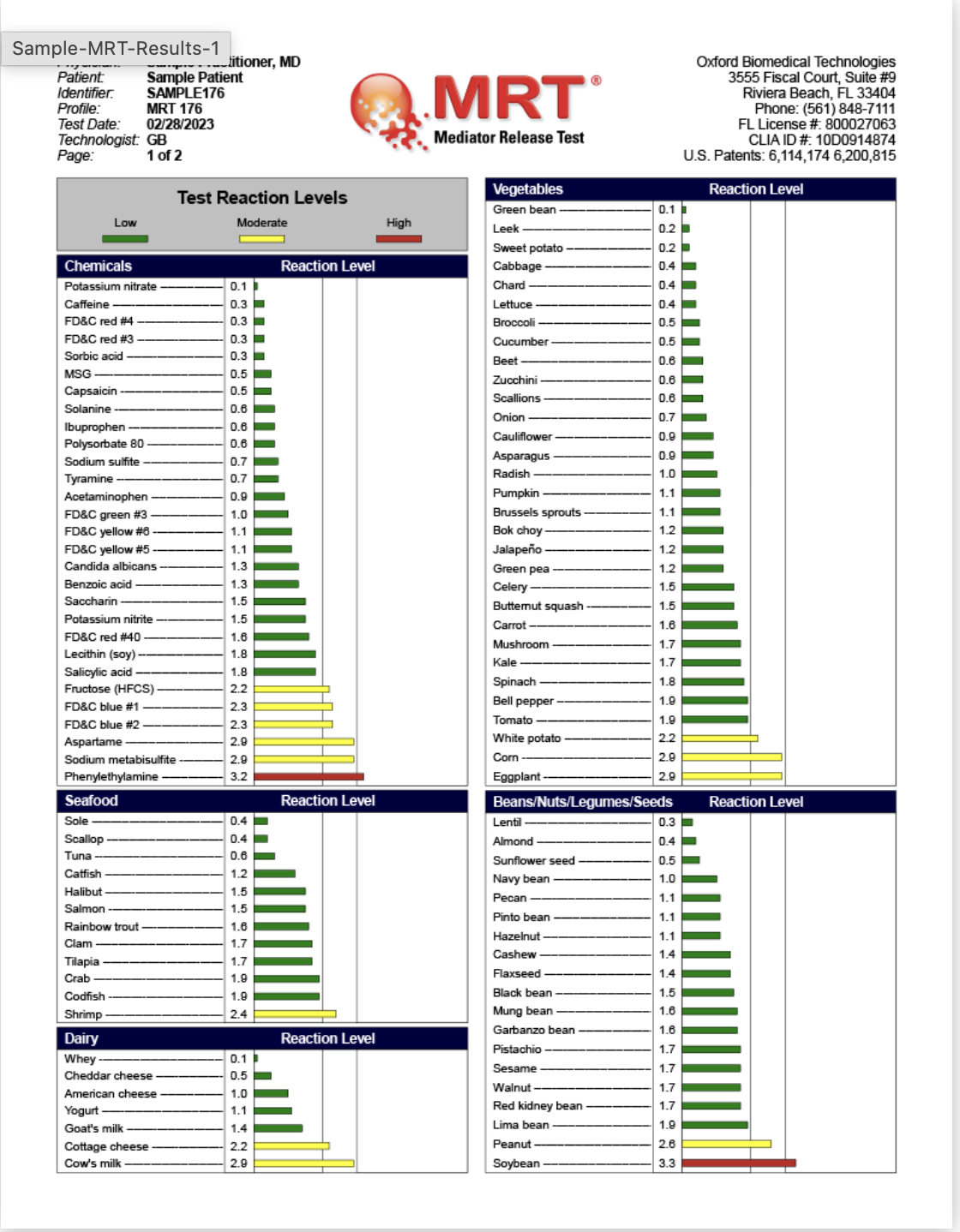
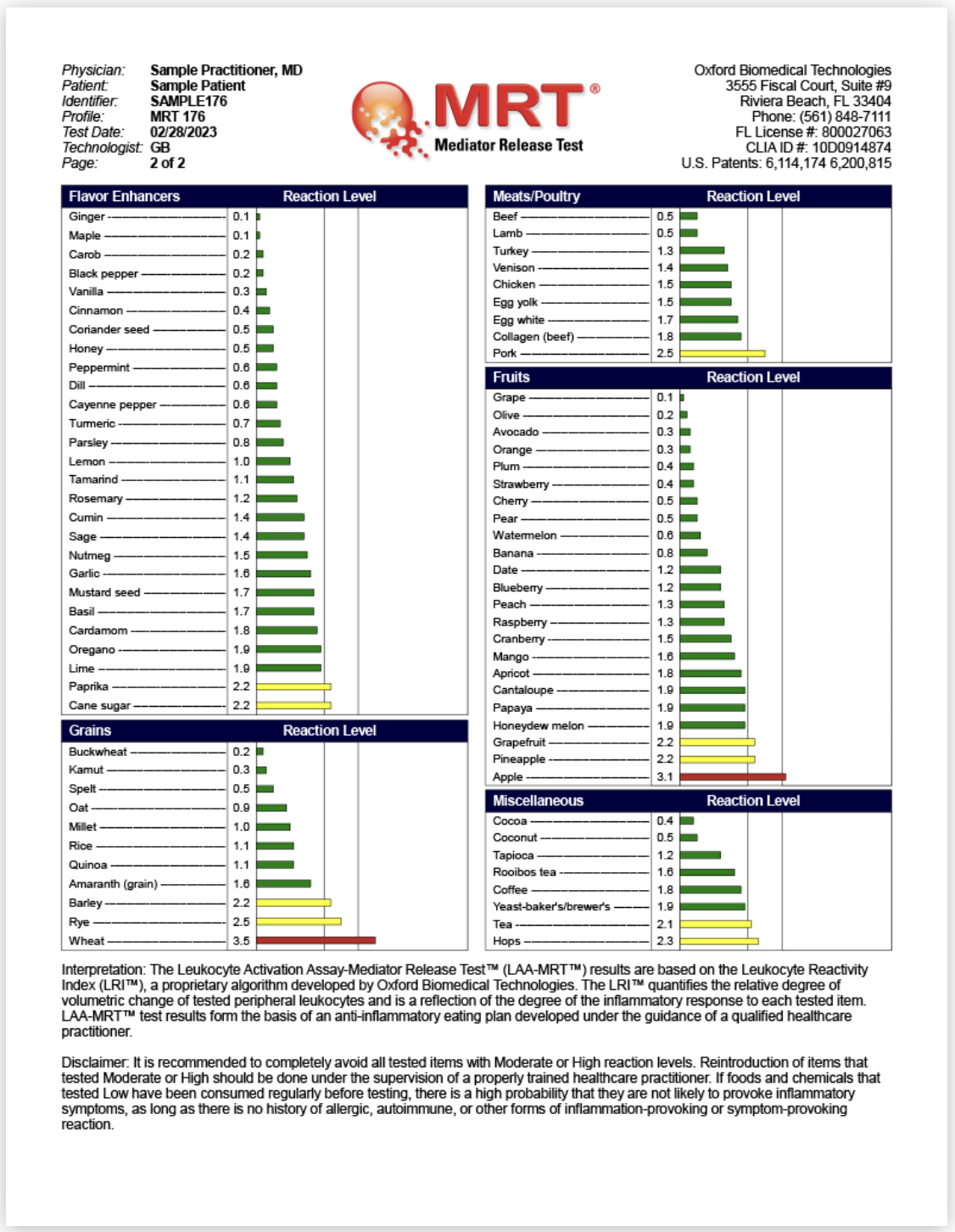
- The MRT measures the actual inflammatory response — the volume change in white blood cells when exposed to a food or food chemical — across multiple immune pathways, not just IgG. This is why it catches reactions that IgG tests miss.
- It also tests food chemicals (salicylates, tyramine, food dyes, solanine, and others) that IgG tests do not include at all. Someone can react severely to a food chemical and a standard sensitivity test will never find it.
The LEAP Protocol
Every other elimination approach hands you a restriction list and tells you to subtract. LEAP uses your test results to identify your lowest-reactivity foods and builds an initial diet from those — foods your immune system is not actively fighting. Then it adds back systematically.
- ✓This is why compliance is dramatically higher than standard elimination diets, and why people feel results within one to two weeks rather than slogging through weeks of deprivation without a clear signal.
- ✓Working with a practitioner who knows how to interpret and sequence the LEAP protocol makes a material difference in outcomes. Most practitioners who order the MRT just hand the client a list of red and yellow foods and call it done. That is not the same thing as the LEAP protocol.
Who This Is For
Research has linked food reactivity to:
Frequently Asked Questions
This offering provides general guidance based on your lab results. Because it does not include a full health history or ongoing care, recommendations are intentionally broad and may require adjustment over time.
If you prefer a more customized protocol that considers your full health history, lifestyle, and ongoing adjustments, I recommend joining my ROOTS program.