
Why I Made My Career About Nutrition: A Personal Story of Food Scarcity, Abundance, and Everything In Between
Rations
Memorial Day has always made me think about sacrifice, but this year I found myself thinking about hunger in different contexts. About the soldiers who ate cold C-rations in foxholes, the families rationing sugar and meat during WWII. And then I thought about my own small childhood experience with scarcity—not born of war, but of the simple reality of young parents learning to make ends meet.
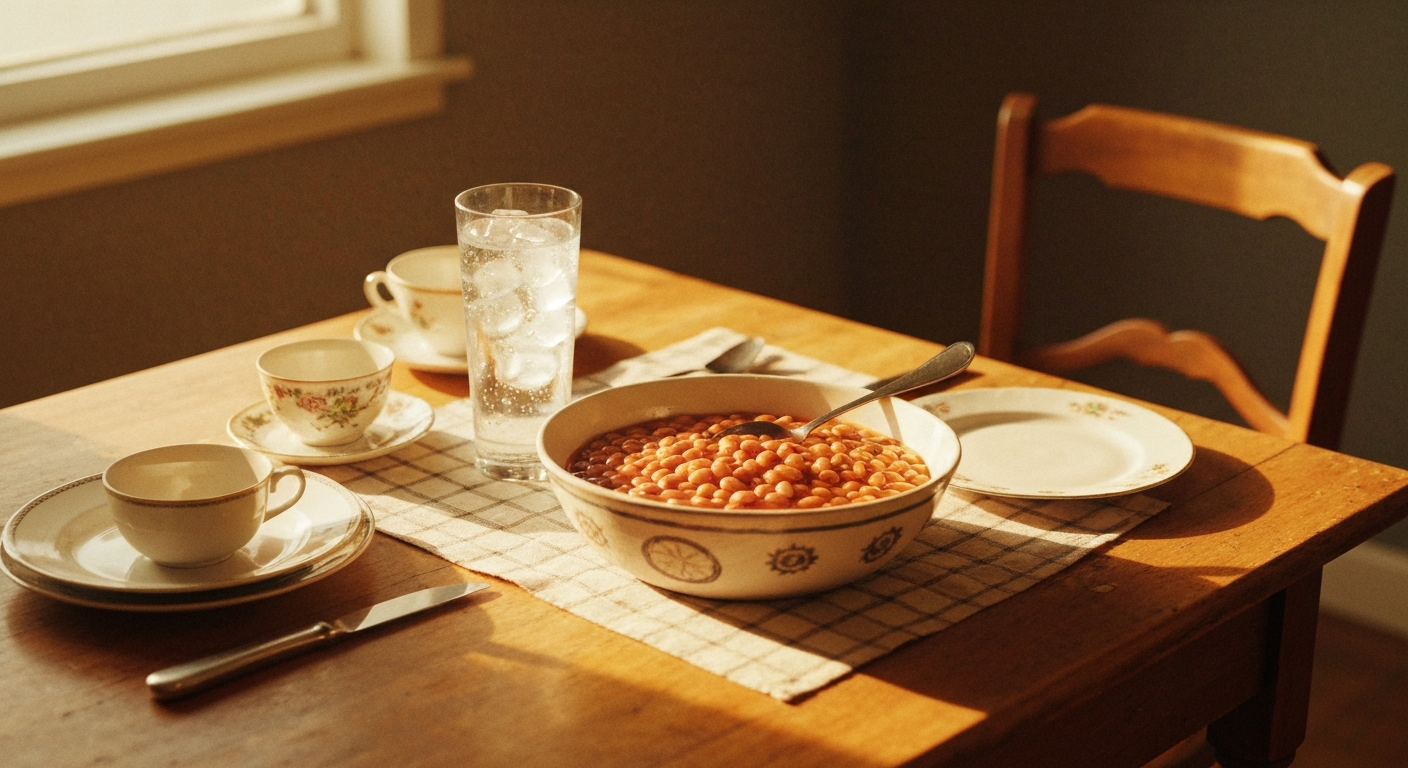
I have specific memories that still surface decades later. I remember my dad eating one of our only three single-serving yogurts and giving me a spoonful from his container. I remember dinners of hot dogs and beans, olive loaf sandwiches—foods that filled us up but left something wanting. I was never worried about where my next meal would come from; there was always something to eat. But "enough" was sometimes elusive.
Then there were visits to our grandparents—once a year pilgrimages. At my mom's parents' house, we'd gather around a table that seated more than a dozen people: leg of lamb, fresh-made rolls, multiple vegetables, abundance that seemed almost shocking. At my dad's side, summer visits meant poolside gatherings with fudgesicles and every flavor of pop imaginable. When we went out to dinner, we were encouraged to reach for things we didn't usually get. Shirley Temples and Roy Rogers while generous grandfathers insisted on footing the bill.
These contrasts—scarcity at home, abundance with extended family—created their own psychological landscape I'm still navigating decades later.
The Scarcity Script: When "Not Enough" Becomes Our Default
Food scarcity in childhood doesn't just affect our bodies; it rewrites our relationship with nourishment, safety, and control. The scarcity script often sounds like: "I better eat this now because it might not be here later." "I need to clear my plate because food is precious." "Food equals love, security, and safety."
This script can show up decades later in surprising ways. Maybe you find yourself finishing meals even when you're full, or feeling anxious when the pantry looks bare. Or maybe, like me, food becomes your primary love language—the way you show care, celebrate achievements, and soothe difficult emotions.
The Abundance Trap: When Too Much Choice Creates Its Own Hunger
Growing up with food abundance creates its own complex psychology. When choice is infinite and food is always available, we can develop "decision fatigue" around eating. The abundance script might whisper: "I can eat whatever I want, whenever I want." "Food is entertainment, not just fuel." This can manifest as emotional eating, constant snacking, or an endless search for the "perfect" meal.
The Neuroscience Behind Our Food Stories
When we experience food scarcity early in life, our amygdala—the brain's alarm system—becomes hypervigilant about food security. This isn't a character flaw; it's evolutionary wisdom. Similarly, in food-abundant environments, our dopamine systems can become dysregulated. The good news? Neuroplasticity means our brains can form new pathways at any age. We can literally rewire our relationships with food.
Flipping the Script
For the scarcity-minded: practice mechanical eating—eat regular meals and snacks regardless of hunger cues. Stock your environment with easy, nourishing foods. Explore food neutrality—a cookie isn't "bad" and a salad isn't "good."
For the abundance-overwhelmed: simplify your food environment, reduce decision fatigue by planning meals ahead. Practice mindful abundance—pause before eating and ask what your body actually needs right now.
The Integration
The most powerful shift happens when we stop trying to overcome our food patterns and start working with them. My early experience of scarcity has made me someone who finds deep joy in feeding others, who views a well-stocked kitchen as a form of love. Rather than seeing this as something to fix, I've learned to channel it consciously.
Our food stories are never just about food. They're about safety, love, control, and connection. Whether your story began with too little or too much, it's shaped who you are today. And today you have the power to write the next chapter consciously, with compassion for all the versions of yourself that brought you here.
Ready to find out why?
If what you just read sounds familiar, a free discovery session is a good place to start. We'll look at what's going on, what's been tried, and whether functional testing makes sense for you.